
Rameshwaram: Where Rama Built the Bridge to Lanka
Rameshwaram in Tamil Nadu is the island town from which Rama’s army is said to have built the Rama Setu bridge to Lanka.
Rameshwaram is a town on Pamban Island, off the southeastern coast of Tamil Nadu. In the Ramayana, it is the shore from which Rama’s army built a bridge across the sea to Lanka.
What the story says
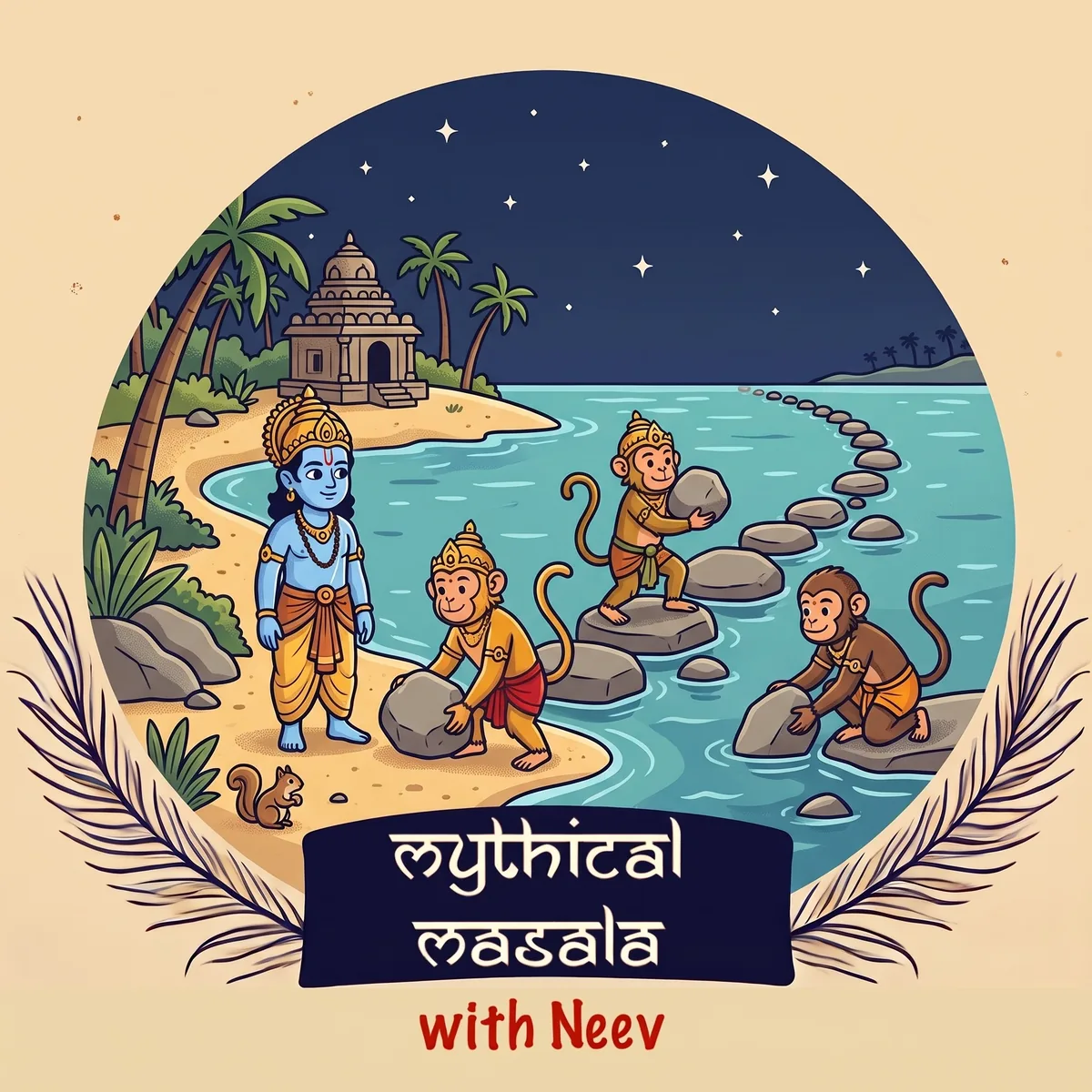
With Sita held captive in Lanka and an ocean in the way, Rama’s vanara army faced an impossible problem. Then Nala, the vanara architect, had an idea: build a causeway of stones across the shallow sea.
For five days the army worked, dropping boulders and trees into the water. The story says the stones floated because Rama’s name was written on them. The bridge, called Rama Setu, stretched all the way to Lanka.
Before crossing, Rama is said to have worshipped Shiva on this shore, which is why the great Ramanathaswamy temple stands here today.
Watch the story
Hear this place come alive in the Mythical Masala episode S1E20: Building the Rama Setu Bridge, Path to Lanka:
Chapters
- 00:00 Hook: the epic climax of the Ramayana is here
- 01:10 An army, an ocean, and one impossible problem
- 01:47 Ravana’s council: the generals laugh off Rama
- 02:24 Vibhishana begs Ravana: return Sita
- 04:35 Vibhishana crosses over to Rama
- 05:28 Three days of prayer, then Rama’s anger
- 06:30 The ocean god’s answer: Nala will build the bridge
- 07:26 Five days of bridge building
- 08:08 Fun facts: Adam’s Bridge
- 09:23 The march to Lanka, and Ravana’s dirty tricks
- 12:08 War plans, and Angad’s last peace mission
- 13:10 Outro: next time, Rama versus Ravana
Find it on the map
Here is Rameshwaram today. Zoom out to see where it sits in India, or tap the button to open it in Google Maps.
What we actually know
According to tradition, the lingam of the Ramanathaswamy Temple was established and worshipped by Rama himself before he crossed to Lanka. The temple is one of the twelve Jyotirlingas and one of the Char Dham pilgrimage sites, and its great corridors were expanded by the Pandya dynasty in the 12th century, which is solid, documented history.
The bridge itself is where faith and geology meet. The chain of shoals between India and Sri Lanka, called Adam’s Bridge, is a real formation of natural limestone shoals, and geological evidence suggests it was once a land connection. In popular Hindu belief it is identified with the Rama Setu of the epic. Scientists describe a natural formation; devotees see Rama’s bridge. This page reports both, and lets you decide what you see.