
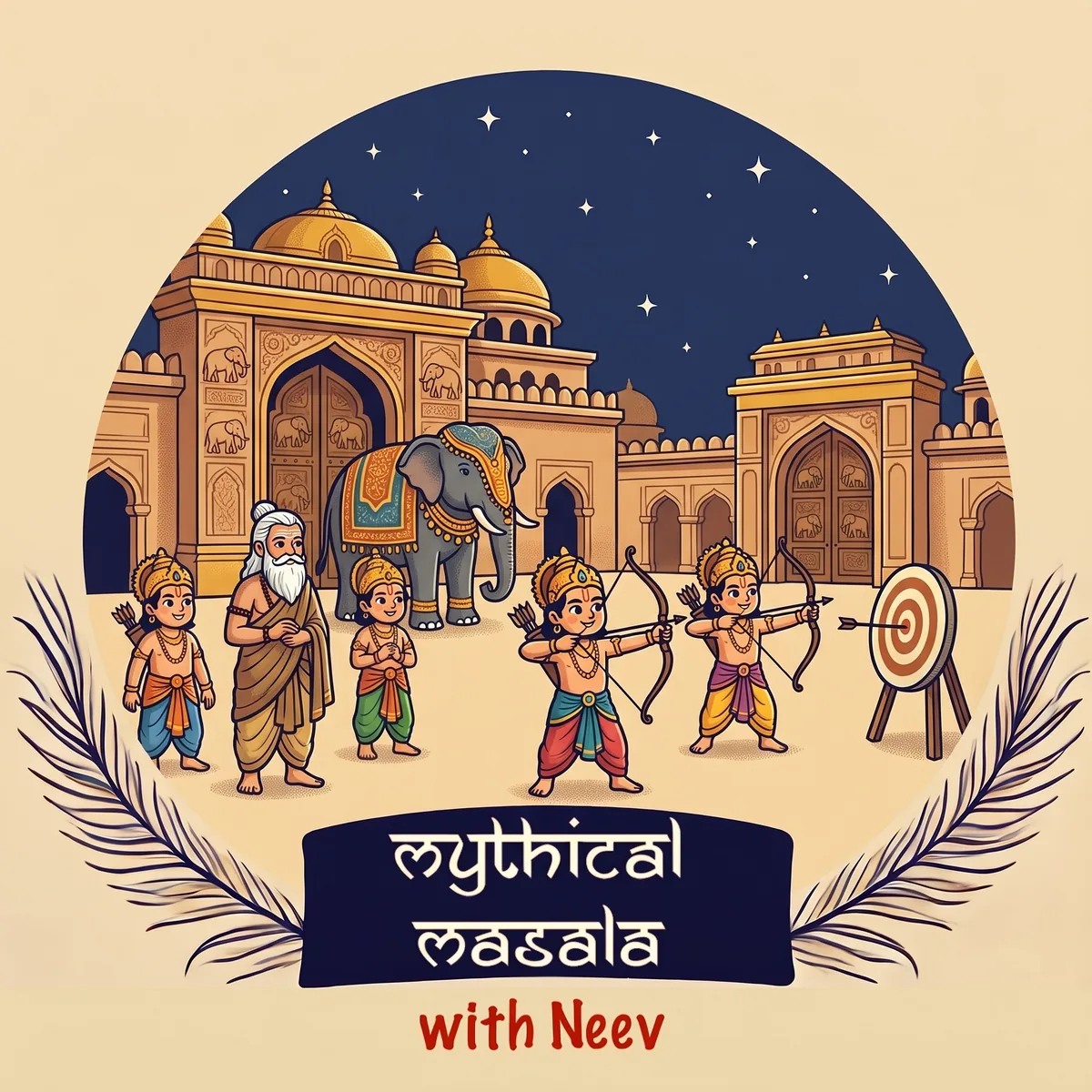
Hastinapur: Capital of the Kuru Kings
Hastinapur in Uttar Pradesh is the city the Mahabharata calls the capital of the Kuru kingdom, the throne the Pandavas and Kauravas fought over.
Hastinapur is a town in the Meerut district of Uttar Pradesh, on the banks of the Ganga. In the Mahabharata, Hastinapura is the capital of the Kuru kingdom, the city whose throne sets the whole epic in motion.
What the story says
This is where King Dhritarashtra holds court, where the Pandavas and Kauravas grow up side by side, and where the fateful game of dice is played, the game that sends the Pandavas into 13 years of exile.
Every great event of the Mahabharata leads back to this city’s throne. The war at Kurukshetra is fought, in the end, over who gets to rule from Hastinapur.
The name itself means the city of elephants, and tradition says it was named after an ancient king called Hasti.
Watch the story
Hear this place come alive in the Mythical Masala episode S4E1: Who’s Who in the Mahabharata: The Kurukshetra War Teams Explained:
Chapters
- 00:00 Hook: cousins versus cousins, and nobody knows who is who
- 02:11 Shantanu, Ganga, and a promise you cannot question
- 03:28 Bhishma’s vow, and the blind king and the cursed king
- 04:42 Dhritarashtra, Gandhari, and one hundred sons
- 05:37 Pandu’s curse, and the five Pandavas
- 07:34 Team Pandava: blood, marriage, and loyalty
- 10:07 Team Kaurava: Duryodhana, Karna, Shakuni, and the trapped elders
- 13:29 Krishna’s choice: the army or the guidance
- 14:08 The ones who refused to fight
- 16:02 Outro: next time, the war begins
Find it on the map
Here is Hastinapur today. Zoom out to see where it sits in India, or tap the button to open it in Google Maps.
What we actually know
Hastinapura is described as the capital of the Kuru kingdom in Hindu texts including the Mahabharata and the Puranas. It sits on the right bank of the Ganga river, and it is even mentioned in the Ramayana.
The modern town is a quiet pilgrimage center today, with temples tied to the epic’s characters. Like the other places in this series, its fame comes from the story; the history of the town itself is the quieter, real-world part.