Why Do We Celebrate Diwali?
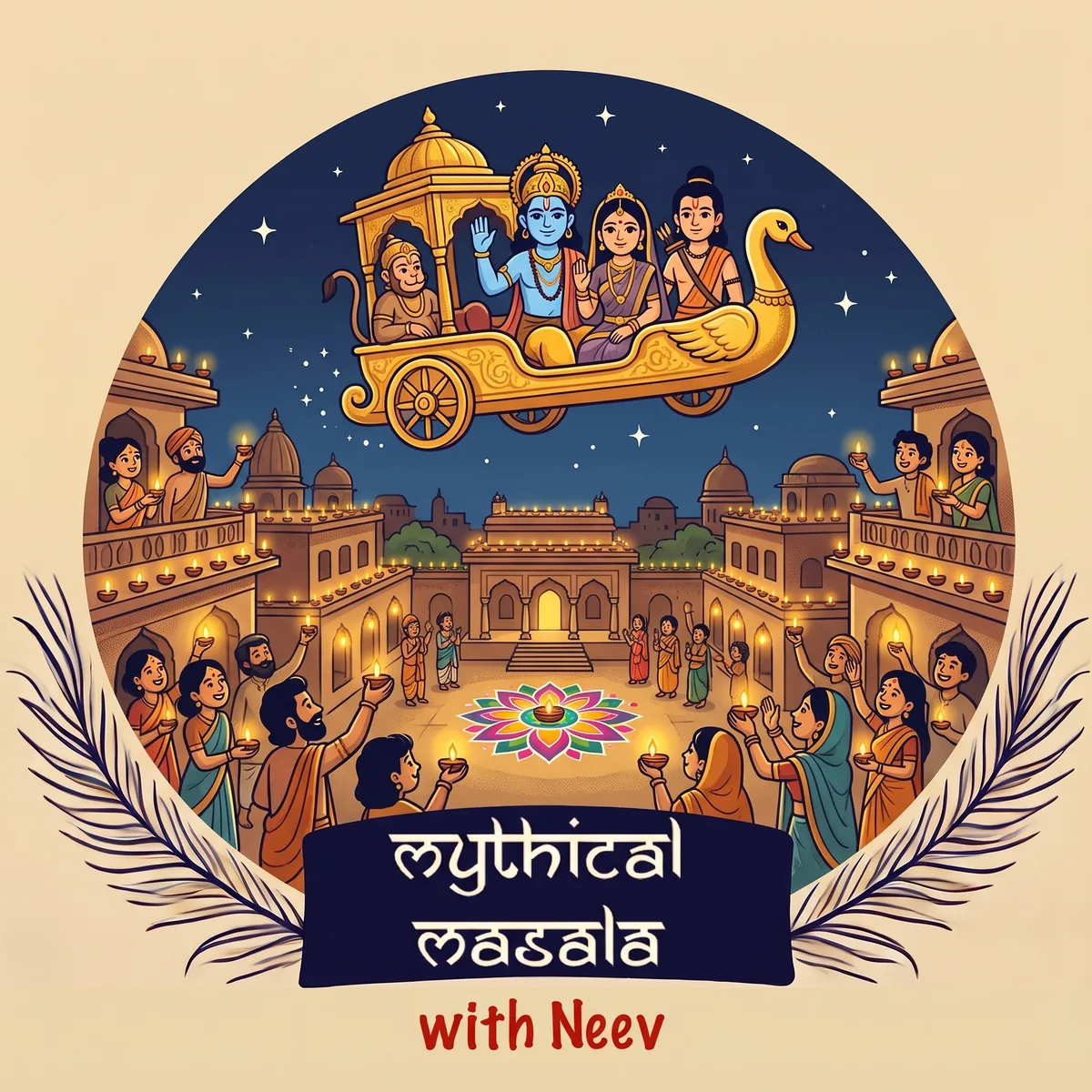
Why do we celebrate Diwali? Every autumn, millions of families light tiny oil lamps called diyas, set off fireworks, share sweets, and gather together. But what’s the story of Diwali for kids? The most beloved answer comes from the Ramayana, the ancient epic of Prince Rama.
After 14 years in exile and a great battle with the demon king Ravana, Rama finally returned home to Ayodhya. The people were so overjoyed that they lit rows of lamps to welcome him, and we’ve been lighting them ever since. Here’s the full story, how the five days of Diwali work, and where to hear it all as an exciting audio adventure.
Print it out: a one-page Diwali story sheet plus a diya coloring page, made for kids in grades K-5.
The story behind Diwali
Long ago, Prince Rama of Ayodhya was sent into exile in the forest for 14 years. While there, the ten-headed demon king Ravana kidnapped Rama’s wife Sita and carried her off to Lanka.
Rama, his brother Lakshmana, and an army of monkeys led by Hanuman crossed the ocean, defeated Ravana in a mighty battle, and rescued Sita. When Rama finally returned to Ayodhya, the whole city glowed with diyas: lamps lit in every window to guide him home and celebrate the victory of light over darkness, good over evil.
That homecoming is what Diwali celebrates. (And here’s a fun secret: in our episode on the Churning of the Ocean, you’ll hear how the goddess Lakshmi, worshipped on Diwali, first rose from the sea, and how some say the Diwali tradition began at the bottom of the ocean!)
The 5 days of Diwali
Day 1: Dhanteras: families clean their homes and buy something new, often gold or steel, for good luck.
Day 2: Choti Diwali: the eve of the festival. Homes glow with diyas and rangoli patterns.
Day 3: Diwali / Lakshmi Puja: the main day! Families pray to Lakshmi, goddess of wealth and fortune, light fireworks, and feast together.
Day 4: Govardhan Puja: celebrates Krishna lifting Govardhan Hill to shelter his village.
Day 5: Bhai Dooja: a day honoring the bond between brothers and sisters.
Listen: the Ramayana episodes behind Diwali
- Ravana’s End: Lakshmana’s Miracle, and Rama’s Ultimate Victory: In this exciting episode of Mythical Masala, we explore the biggest chapter of the Ramayana.
- Ramayana: Farewell of Rama : The Final Journey (Part 2): Join Neev as we reach the emotional climax of the Ramayana.
- The Churning of the Ocean: Poison, a Goddess, and a Pot of Immortality: The gods have lost everything to a careless curse.
Why kids love the Diwali story
Diwali’s story has everything kids love: a long adventure, a scary villain, a clever monkey god, a bridge built across the ocean, and the happiest homecoming ever. And when they light a diya, they’re not just holding a lamp. They’re holding a 2,000-year-old story in their hands.
Listen in order
Start at the top and follow the story.


Frequently asked questions
Why do we light diyas on Diwali?
We light diyas to remember the lamps the people of Ayodhya lit to welcome Rama home after 14 years of exile. Light also stands for good driving out darkness and ignorance, which is the heart of what Diwali celebrates every year.
What is the real story behind Diwali?
The most famous story comes from the Ramayana: Rama returned to Ayodhya after 14 years of exile and his victory over Ravana, and the city lit lamps to welcome him. In other regions, Diwali also celebrates Krishna’s victory over the demon Narakasura and honors the goddess Lakshmi.
How many days is Diwali celebrated?
Diwali is celebrated over five days. It starts with Dhanteras, when families clean their homes and buy something new, then Choti Diwali, the main Diwali day with Lakshmi Puja, Govardhan Puja, and finally Bhai Dooja honoring brothers and sisters each year.
When is Diwali?
Diwali falls in October or November each year, on the new moon night of the Hindu month of Kartika. The exact date changes every year because it follows the lunar calendar, so families check the calendar each autumn before the festival.
Why is Lakshmi worshipped on Diwali?
Families pray to Lakshmi, the goddess of wealth and good fortune, on the main day of Diwali. People believe she visits clean, well-lit homes, so they light diyas and fireworks to welcome her blessings for the coming year with joy.