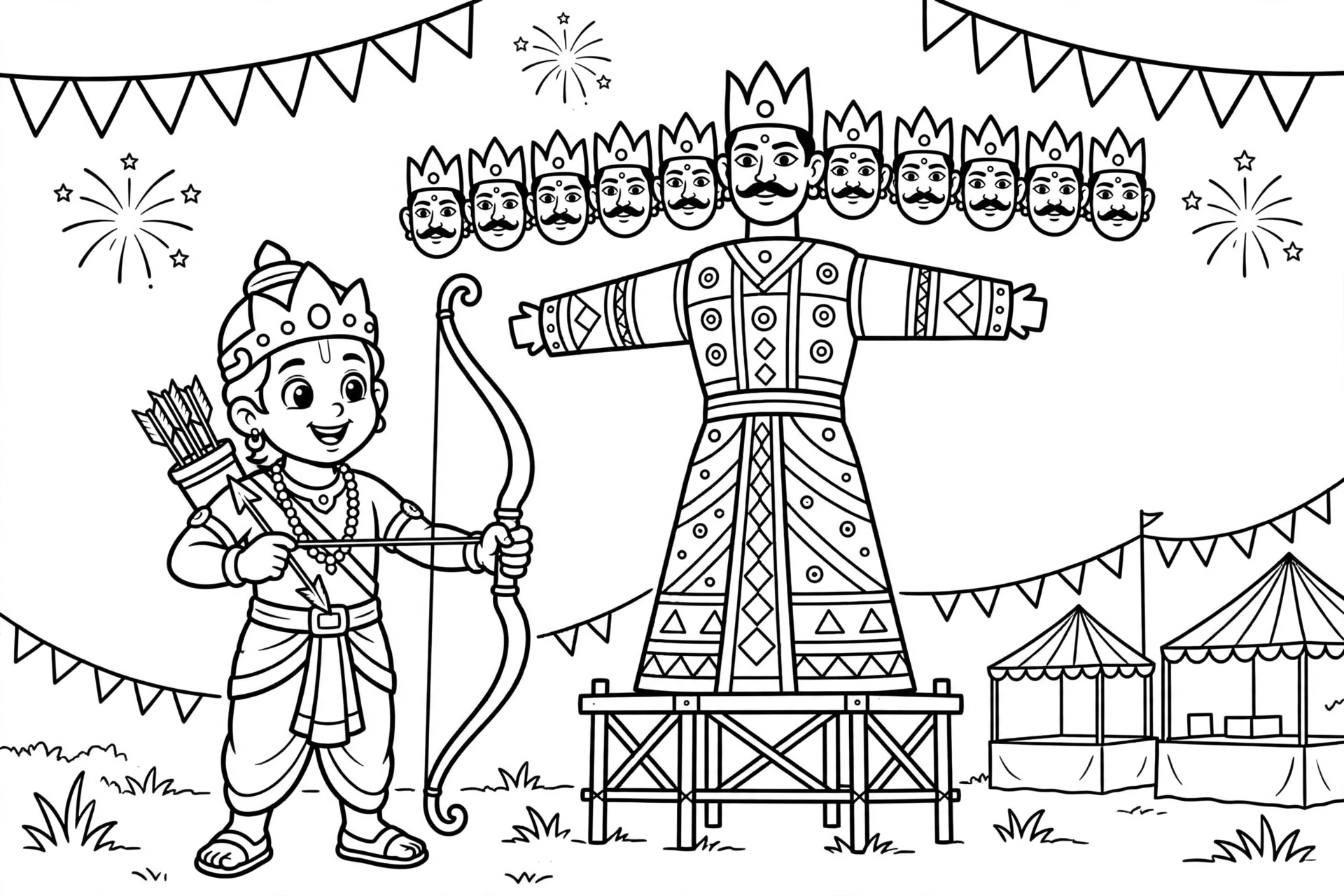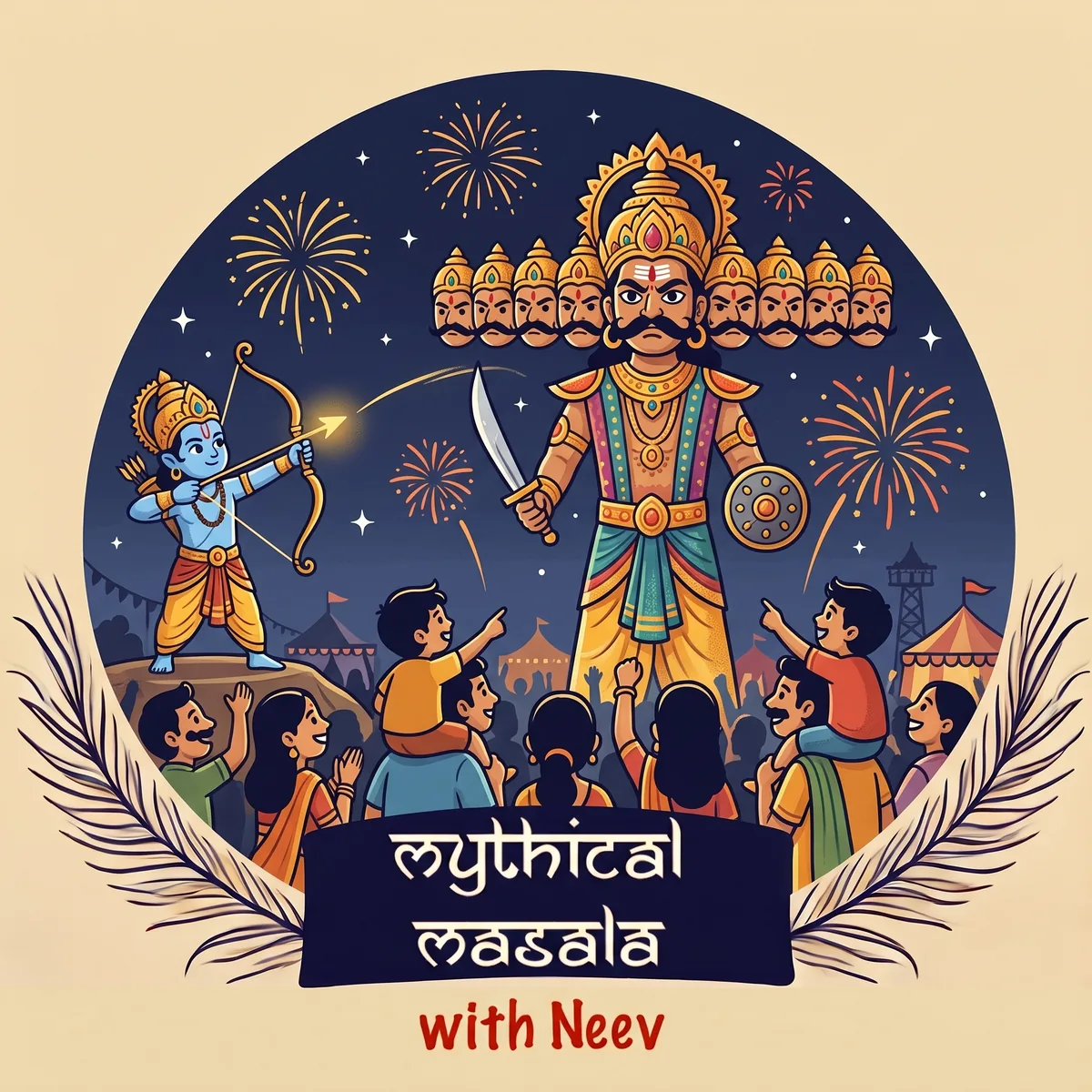
The Dussehra Story for Kids
Why do we celebrate Dussehra? Because it’s the day good defeated evil in the most famous battle of Indian mythology: Rama vs. Ravana! The Dussehra story for kids is the exciting climax of the Ramayana.
After Sita was kidnapped, Rama marched to Lanka with his monkey army, battled the ten-headed demon king for days, and finally struck him down. Dussehra (also called Vijayadashami, ‘the tenth day of victory’) marks that triumph. Here’s the story, how India celebrates it, and where to hear the whole battle.
The story behind Dussehra
Ravana, the ten-headed king of Lanka, had a boon that made him nearly impossible to kill, and he used his power to terrorize the world. When he kidnapped Sita, Prince Rama’s wife, Rama knew there was only one answer: war.
With Hanuman and Sugreeva’s vanara army, Rama built a bridge across the ocean to Lanka. The battle raged for days: giants fell, brothers fought brothers, and finally Rama aimed a divine arrow at Ravana’s heart. Evil was defeated, Sita was rescued, and the world could breathe again.
That victory is what Dussehra celebrates: the moment courage and righteousness win, no matter how powerful evil looks.
How India celebrates Dussehra
In North India, towns stage Ramlila, open-air plays retelling the Ramayana over nine nights, ending with the burning of giant effigies of Ravana, his brother Kumbhakarna, and his son Meghnad, as fireworks explode. In Mysore, the festival ends with a royal elephant procession; in Bengal, the same season brings Durga Puja, celebrating the goddess Durga’s victory over the buffalo demon Mahishasura.
Listen: the battle of Lanka
- Ravana’s End: Lakshmana’s Miracle, and Rama’s Ultimate Victory: In this exciting episode of Mythical Masala, we explore the biggest chapter of the Ramayana.
- Hanuman Meets Ravana, and the Burning of Lanka: In this action-filled episode of Mythical Masala, Hanuman confronts Ravana in his grand court, delivering Rama’s message and warning of impending…
- Building the Rama Setu Bridge: Path to Lanka: In this key episode of Mythical Masala, Neev narrates the suspenseful moments as Rama’s army prepares to cross the ocean to Lanka.
Why kids love the Dussehra story
It’s the biggest showdown in mythology: a prince, a monkey army, a flying chariot, and a ten-headed villain. Kids love counting Ravana’s heads, cheering the vanara army, and learning that even the scariest evil can be beaten with courage and good friends.
Listen in order
Start at the top and follow the story.


Frequently asked questions
What is the story behind Dussehra?
Dussehra marks Rama’s victory over Ravana, the ten-headed demon king of Lanka, in the Ramayana. After Sita’s rescue, Rama defeated Ravana in a great battle, and the festival celebrates that moment when courage and righteousness beat even the scariest evil.
Why is Ravana burned on Dussehra?
Giant effigies of Ravana are burned to show evil being destroyed. The burning usually follows nine nights of Ramlila, open-air plays that retell the Ramayana, and ends with fireworks as the effigies go up in flames and the crowd cheers.
What is the difference between Dussehra and Diwali?
Dussehra celebrates Rama’s victory over Ravana in battle. Diwali comes about 20 days later and celebrates his return home to Ayodhya. In short, Dussehra is the battle won and Diwali is the happy homecoming, two festivals that belong to the same great story.
When is Dussehra?
Dussehra falls in September or October each year, on the tenth day after Navratri. It is also called Vijayadashami, which means the tenth day of victory, and it marks the end of the nine nights of Navratri every autumn in India.
What is Ramlila?
Ramlila is the open-air play that retells the Ramayana over nine nights leading up to Dussehra. Towns across North India stage the story of Rama, Sita, and Ravana, and the festival ends with the burning of Ravana’s giant effigy with fireworks.